Buy Now, Pay Later: Benefits, Costs, and Common Risks are clearer when someone sees a real bill split into small, timed payments. BNPL began as a simple “pay-in-4” convenience and now shapes many online checkouts. This article explains what BNPL is, why it grew to a $70 billion U.S. market by 2025, where costs hide, and how shoppers and merchants can spot danger signs before a purchase becomes a headache.
Key Takeaways
- Buy Now, Pay Later (BNPL) allows consumers to split purchases into interest‑free installments, making budgeting easier and increasing spending power.
- BNPL drives higher conversion rates and larger order sizes for merchants by offering flexible, low-friction payment options at checkout.
- Consumers should beware of hidden costs such as late fees and bank overdrafts that can turn BNPL plans into expensive short-term loans.
- Debt stacking from multiple BNPL plans can cause financial strain, so users must track payments carefully to avoid overlapping obligations.
- Transparent checkout disclosures and understanding terms help consumers avoid unexpected fees and protect their rights when using BNPL.
- BNPL works best for necessary purchases with a clear repayment plan and disciplined budgeting, while non-essential or overlapping plans pose significant risk.
What Buy Now, Pay Later Is And Why It’s Growing
Fact up front: BNPL is short-term installment credit that lets a buyer receive goods immediately and repay in scheduled installments, often with no interest if payments are on time.
Why it grew fast: consumers saw a clear benefit, small, predictable payments, while merchants saw higher conversions and larger baskets. Between 2021 and 2025, U.S. BNPL volume rose about 20% annually and reached roughly $70 billion in 2025, with pay‑in‑4 offerings alone accounting for over $63.3 billion. Globally, the market hit an estimated USD 235.6 billion in 2025 and analysts project long-term expansion toward the trillion-dollar range by 2035.
How it works in practice: a shopper selects BNPL at checkout, completes a short app-based approval (often a soft credit check), and splits the purchase into equal payments over weeks or months. Typical products include “pay in 4” over six to eight weeks and longer-term installment loans lasting several months. The speed and low friction, quick approval, integrated checkout buttons, and marketing that highlights “0% interest”, explain the surge among millennials and Gen Z.
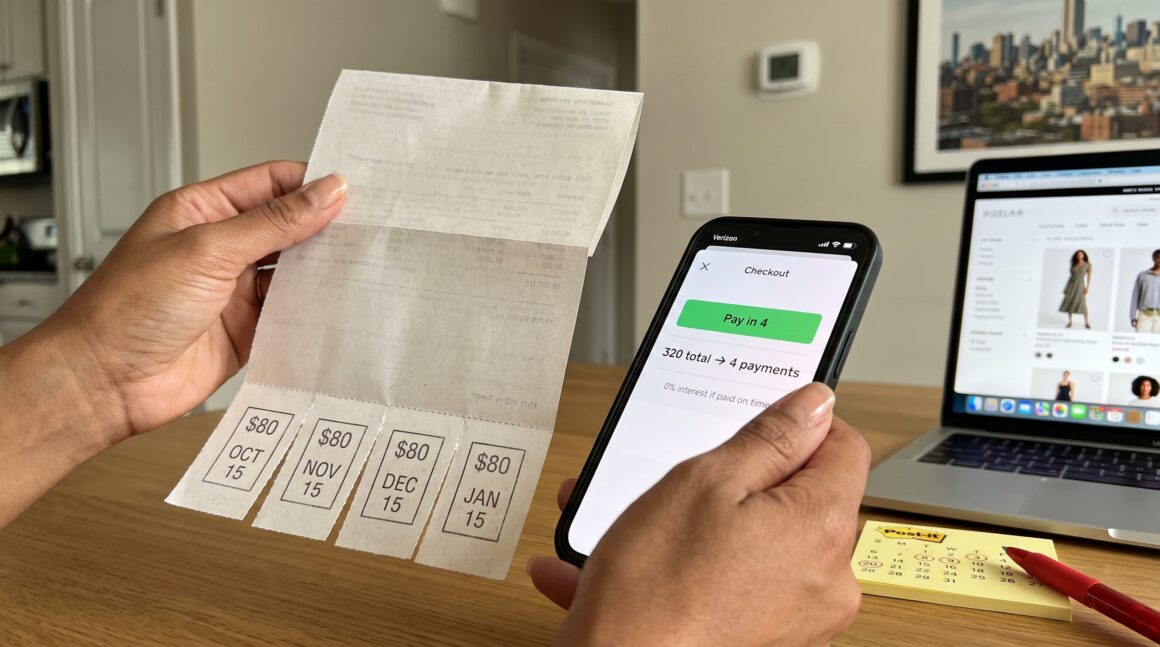
Concrete moment: a customer buys a $320 pair of headphones, sees four $80 installment messages, and clicks the BNPL option. The immediate appeal is tangible: $80 today feels easier to swallow than $320, even though the buyer still owes the full amount.
Related coverage on RarefiedTech explores how fintech features like app UX and payment rails shaped BNPL’s rise and customer behavior.
Key Benefits For Consumers And Merchants
Answer first: BNPL benefits include predictable budgeting for consumers and higher conversion rates for merchants. This context pairs well with the overview guide for readers who want more detail.
For consumers:
- Interest‑free installments when paid on time. This can be a real, measurable benefit: spreading a $600 refrigerator into six interest-free payments reduces immediate cash strain.
- Easier approval than traditional credit. Many BNPL providers use soft credit checks and have higher approval rates, letting more people access installments.
- Transparent split payments at checkout make impulse decisions feel manageable: some buyers report using BNPL to smooth income timing between paychecks.
For merchants:
- Higher average order value. Data shows stores offering BNPL often see larger baskets because customers buy more at checkout.
- Better conversion rates. BNPL reduces cart abandonment for high-ticket items, especially among younger shoppers.
- Access to new customers. Merchants tap a demographic that prefers flexible payments and mobile-first purchase flows.
A practical example: an online apparel retailer added BNPL and saw average order size increase by 18% within three months. That is a measurable uplift worth weighing against fees.
Related RarefiedTech articles explain how BNPL fits inside modern fintech stacks and digital wallets and offer operational steps for merchants to test installment options.
Direct And Indirect Costs To Watch For
Direct answer: BNPL can be interest‑free, but consumers face real costs like late fees, bank overdrafts, and indirect financial friction that add up.
Direct costs:
- Late and returned‑payment fees. A missed $40 installment can trigger a fee that converts a low-cost plan into an expensive one.
- Explicit service or subscription fees on some merchant or provider models.
Indirect costs:
- Bank overdraft or NSF charges when auto‑debits hit an empty account. For example, a $45 missed auto‑debit can produce a $35 overdraft plus a BNPL late fee, suddenly the effective cost approaches high APR territory.
- Opportunity cost. Using many small BNPL plans ties up repayment windows and reduces available cash for emergencies.
- Higher merchant fees. Merchants often pay higher per‑transaction fees to BNPL providers compared with some traditional card processors.
Concrete numbers: regulators and researchers note that BNPL users show higher overdraft and late‑fee charges than non‑users. While a simple “pay in 4” plan may seem free, typical cases where consumers miss one payment convert the plan into an expensive short-term loan.
Practical warning: always read terms for late fees and the provider’s dispute process. Consumers should map upcoming withdrawal dates against paydays to avoid overlapping debits that create bank penalties.
Contextual link: for readers wanting a broader fintech view, RarefiedTech’s guide on How Digital Banking Is Changing Everyday Money Management shows how account features and payment scheduling affect these indirect costs.
Common Risks, Red Flags, And Real-World Examples
Direct insight: the biggest risks are debt stacking, inconsistent disclosures, and data monetization, all of which have concrete, measurable consequences.
Debt accumulation: many users stack multiple BNPL plans. Research shows roughly one‑third or more users report at least one late payment: cumulative obligations can exceed a household’s short-term liquidity. Example: someone with three active plans totalling $900 in future payments may face $300 in monthly outflows that weren’t obvious at purchase.
Disclosure and rights gaps: BNPL disclosures vary by provider and merchant. Some customers discover limited dispute protections compared with credit cards when goods are faulty or returned. That gap can leave a buyer responsible for scheduled payments while a merchant refund lags.
Data and privacy risks: BNPL firms collect transactional, demographic, and behavioral data that they may monetize for underwriting, marketing, or resale. Consumers often do not fully realize how much profiling happens at approval.
Real world example: in 2024–25 reporting, regulators raised alarms about increasing BNPL delinquency trends and opacity in fee structures. A 2025 industry roundup showed rapid expansion is creating localized pockets of higher late payments, prompting tighter scrutiny in some jurisdictions.
Red flags to watch for at checkout:
- Small-print late‑fee caps that still permit high total charges.
- Automatic enrollment in merchant subscriptions or “partner offers.”
- No clear dispute or refund path documented in the checkout flow.
Contextual reference: industry reporting about BNPL’s rapid expansion and regulatory concern underscores these risks: readers can compare reporting to their local protections before using a plan. Retailers and platforms can reduce these hazards by improving checkout clarity and post‑sale communication.
Further reading inside RarefiedTech’s fintech cluster touches on payment rails and UX design that can reduce customer confusion: see the analysis on mobile wallet security for relevant consumer protections.
Conclusion: When BNPL Makes Sense — And When To Walk Away
Key takeaway: BNPL makes sense for necessary purchases that fit a clear repayment window and when the buyer confirms no bank penalties will follow. It’s a pragmatic budgeting tool if used sparingly and with calendar discipline.
Walk away when BNPL funds non-essential spending, when multiple plans overlap, or when terms are unclear. A single missed payment can create a chain of fees and bank charges that erase convenience.
For a fuller view of BNPL’s place inside fintech and ongoing coverage of payment innovation, RarefiedTech maintains a pillar guide that explains related services and risks.