
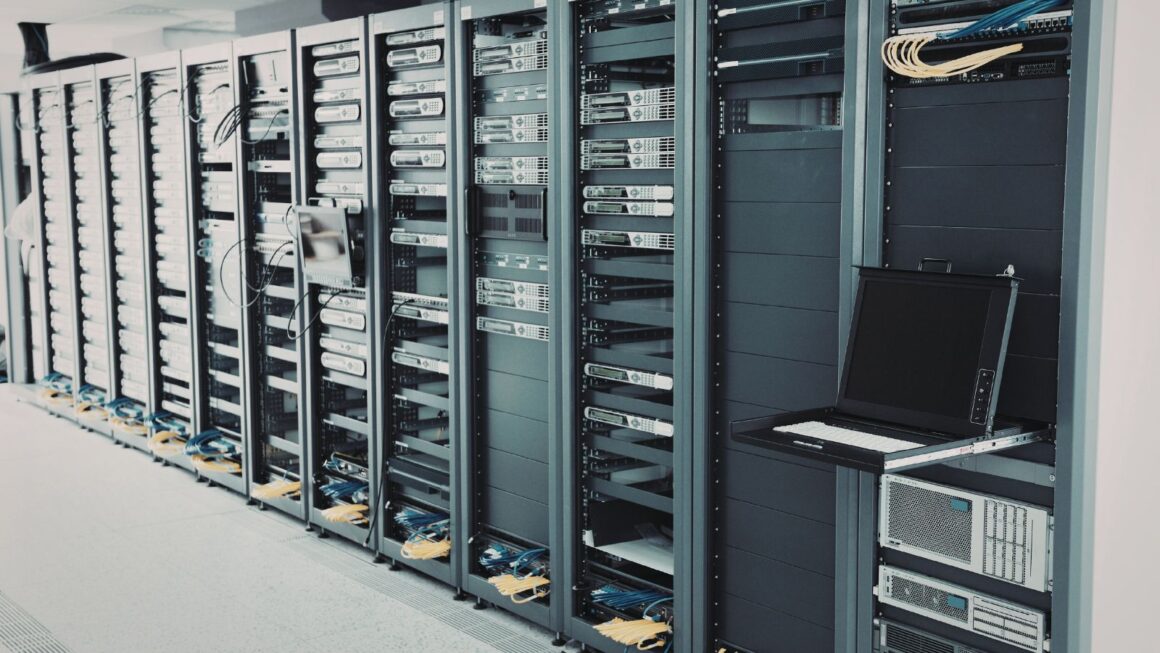
Disposing of old servers requires careful planning, from data security to regulatory compliance. Businesses face multiple challenges, including safeguarding sensitive information, minimizing environmental impact, and navigating complex state and federal e-waste laws.
Professional IT asset disposition (ITAD) companies simplify the process by managing decommissioning, secure data destruction, and responsible recycling. Options such as on-site or off-site destruction offer different benefits depending on volume and security needs.
Understanding certifications like R2 and e-Stewards, as well as preparing detailed asset inventories, helps organizations avoid fines, recover value, and maintain compliance while protecting both data and the environment.
Working with Professional Server Disposal Services
Handling server disposal services in-house sounds appealing until you realize the complexity involved. Professional ITAD companies exist, and with good reason, too.
Benefits of ITAD Companies
When it comes to managing outdated IT infrastructure, leveraging a professional Server Disposal Service like Big Data Supply through professional IT asset disposition (ITAD) ensures servers are liquidated both quickly and securely.
ITAD providers oversee the entire process, from decommissioning to certified destruction and environmentally responsible recycling, helping businesses maximize value while protecting sensitive data.
Security sits at the top of the benefits list. Professional providers offer certified data destruction methods, whether through physical destruction, degaussing, or software-based wiping. They comply with regulations like GDPR, HIPAA, and state-level e-waste requirements. This protects you from data breaches and the fines that follow.
Most businesses find the financial benefits surprising. Many ITAD companies run competitive buyback programs that let you sell old equipment for cash. What seems like a disposal cost turns into revenue recovery. Secure data destruction prevents breaches and compliance violations that get pricey. Unused assets waste valuable space and resources when you hold onto them.
Environmental responsibility matters too. Certified providers prioritize extending asset life through refurbishment and reuse whenever possible. They employ eco-friendly disposal methods for assets beyond repair.
Certifications like R2v3 demonstrate adherence to responsible recycling practices. Materials like steel, aluminum, and circuit boards get recovered and sent to smelters and refineries after destruction.
Onsite vs Offsite Disposal
You face two main choices for secure server disposal. Each serves different business needs.
On-site destruction brings specialized equipment to your location. Certified technicians destroy data-bearing devices on your premises. Your data never leaves your site.
Methods include physical shredding, crushing, and degaussing. You witness the destruction firsthand and eliminate transport risks. This suits organizations that handle sensitive data or face strict regulatory requirements.
The catch? On-site services get pricey due to specialized equipment and personnel requirements. This option proves more practical and timely for smaller quantities.
Offsite destruction transports devices to a specialized facility with 24-hour CCTV surveillance.
Professional services use military-grade erasure techniques. Facilities combine industrial-grade shredders and crushers with techniques like degaussing and high-temperature incineration. Offsite proves more budget-friendly for large volumes.
It provides access to industrial-grade equipment and frees up your space and resources. Many facilities offer additional services like electronics recycling. Offsite still maintains compliance and security through strict chain of custody protocols while being cheaper.
What to Expect from Pickup Services
Professional pickup transforms what could be a logistical nightmare into a managed process. Submit a request, and certified providers remove your equipment, audit and test devices, wipe all data, then send you a complete report.
Chain of custody tracking follows your assets from pickup through final disposition. Advanced providers use AI-driven scanning solutions that serialize IT assets at the point of pickup. High-resolution cameras and 3D scanning create photographic evidence of device receipt and condition.
Certificates of destruction arrive after completion. These documents list each device and the destruction methods used. Detailed documentation proves essential, especially for audit trails and regulatory checks. Both onsite and offsite services provide these certificates as proof of secure data destruction.
Field technicians handle de-installation, packing, and palletization. Secure transport maintains the chain of custody throughout. The process follows NIST 800-88 standards and provides detailed asset reporting.
Environmental Compliance and Responsible Server Disposal
Regulatory compliance isn’t something you figure out after disposing of servers. Twenty-eight US states have passed e-waste laws that make improper disposal illegal. Get this wrong, and penalties stack up fast.
Understanding E-Waste Regulations
The United States lacks a single federal e-waste law. We face a patchwork of federal and state requirements instead. The Resource Conservation and Recovery Act (RCRA) regulates hazardous waste disposal at the federal level and covers certain electronics.\
State laws vary. California enforces the Electronic Waste Recycling Act and classifies e-waste as universal waste under hazardous waste regulations. New York mandates recycling through its Electronic Equipment Recycling and Reuse Act.
Texas requires businesses that generate over 220 pounds of hazardous waste monthly to get EPA and TCEQ identification numbers. Servers contain hazardous materials like lead, mercury, cadmium, and arsenic.
These substances cause irreversible health effects that range from cancers to neurological damage and diminished IQs when handled improperly. Electronics often test as hazardous waste when designated for disposal, so businesses must conduct waste determinations before discarding waste thought to be hazardous.
The world generated 62 million tons of e-waste in 2022, an 82% increase since 2010. Only 22.3% was collected and recycled properly. That gap represents environmental and legal risk.

R2 and e-Stewards Certifications
Two EPA-recognized certifications exist for responsible server disposal: R2 and e-Stewards. Both advance best management practices and require third-party audits. R2 (Responsible Recycling) comes from Sustainable Electronics Recycling International and stands as the most adopted standard.
Facilities undergo multi-step audits that include site visits, personnel interviews, and documentation reviews. R2 certification covers the primary facility and all downstream vendors. Full re-audits happen every three years, with surveillance audits in interim years.
e-Stewards certification requires Basel Convention compliance for international transboundary movements. This prevents harmful material exports to developing countries. The Basel Action Network manages the standard and demands ISO 14001 or RIOS environmental management systems.
Facilities face unannounced inspections and GPS tracking through EarthEye technology. Certification renews every three years with two-year surveillance audits. Both certifications protect you from data, health, safety, and environmental risks. Federal facilities must use R2 or e-Stewards certified recyclers.
Avoiding Landfill Penalties
California takes the toughest stance. DTSC violations cost up to $70,000 USD per violation per day. California’s hazardous waste fee program has 300% penalties for willful non-compliance. Illegal dumping under California Penal Code 374.3 brings fines up to $10,000 plus potential six-month jail time.
Major corporations paid dearly for mistakes. Target settled for over $3.5 million USD for improper e-waste handling. Comcast paid California $25.95 million USD for improper e-waste disposal. These aren’t small oversights. They’re systematic compliance failures.
Illinois starts at $25 USD for first-time violations but escalates for repeats.
New York charges $100 USD fines. Connecticut ranges from $99-$250 USD for first offenses and jumps to $250-$1,000 USD for subsequent violations. Partner with certified e-waste recyclers that meet R2 or e-Stewards standards.
Maintain full documentation from sanitization logs to destruction certificates. Documentation proves compliance during audits and protects against liability claims. Many jurisdictions require three-year record retention.
Steps to Prepare Servers for Disposal
Preparation separates smooth transitions from chaotic scrambles. Follow these steps to execute the server disposal process properly.
Create an Asset Inventory List
A detailed inventory of every server heading out the door comes first. Asset type, model number, serial number, and data storage capacity should be recorded. Each unit’s condition needs assessment.
Sort equipment into data-bearing and non-data-bearing categories at this phase. Servers, mobile devices, and removable drives fall into the sensitive camp. Technical specifications like CPU, RAM, storage configuration, and physical condition should be noted. Your physical count should be cross-referenced against existing CMDB records to catch discrepancies.
Remove Unnecessary Components
Components that hold separate value or need special handling should be stripped out. Software licenses need to be pulled for cancellation. Drives should be extracted if your data security policy requires separate destruction paths.
Schedule Pickup or Drop-off
Your ITAD partner should be coordinated with to arrange pickup timing with maintenance windows. Professional services handle de-installation, packing, and palletization.
Document the Whole Process
Detailed records of the whole server disposal process should be maintained. This has inventory lists, data erasure certificates, and recycling receipts. Documentation proves compliance during audits. These records should be kept for at least three years to satisfy regulatory requirements.
Closing Remarks
Proper server disposal balances security, compliance, and environmental responsibility. Certified ITAD providers offer structured processes, from inventory management to destruction certificates, reducing the risk of breaches and regulatory penalties.
Choosing between onsite and offsite services depends on organizational priorities, including data sensitivity and budget. Adhering to state-specific e-waste laws and leveraging recognized certifications like R2 or e-Stewards further ensures legal and environmental accountability.
By preparing assets carefully, documenting each step, and partnering with certified professionals, businesses can streamline server liquidation, recover value, and maintain compliance, all while minimizing their environmental footprint and operational disruption.