
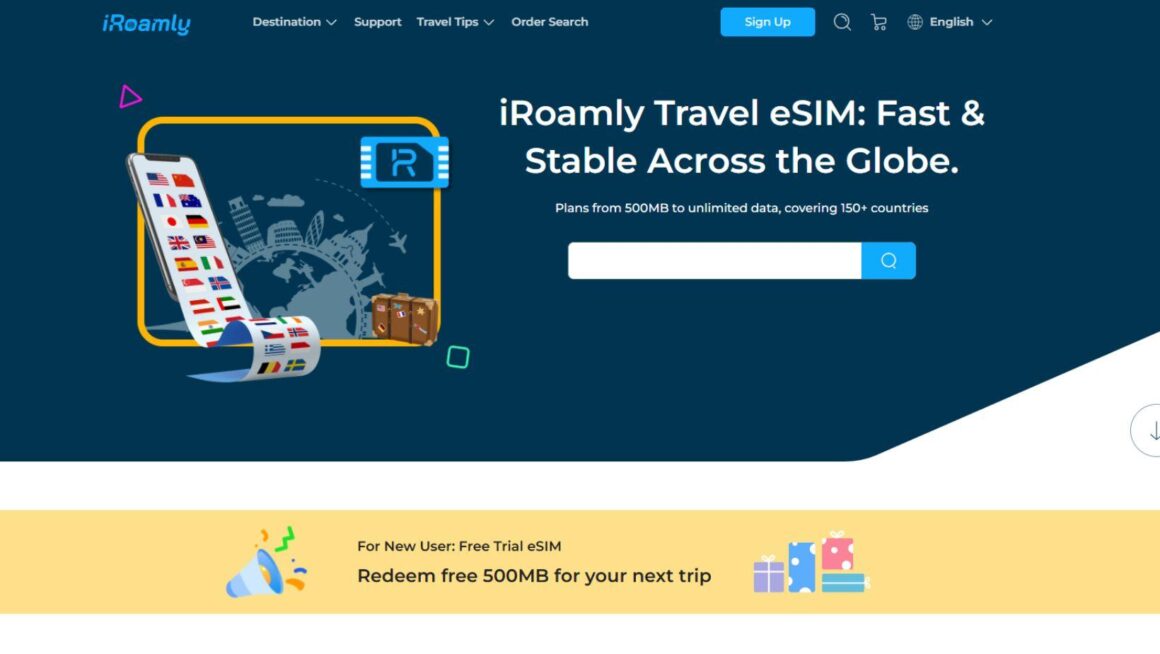
For years, my pre-travel ritual involved a small, dedicated pouch: a paperclip for ejecting SIM trays, a folded printout of local carrier rates, and enough patience to last through at least one airport kiosk negotiation. That ritual died on a layover in Istanbul when I realized I had spent more time managing my connectivity than actually planning my itinerary. The shift to eSIM technology has been gradual for most travelers, but for anyone who has ever landed in a new country and watched their phone stubbornly display “No Service,” the appeal is immediate. The service I kept coming back to during these transitions is Iroamly esim. What started as a convenient alternative to physical SIM cards has, in practice, become something closer to a travel essential—provided you understand exactly how it fits into your specific style of movement.
The Shift From Hardware to Software: What eSIM Actually Changes
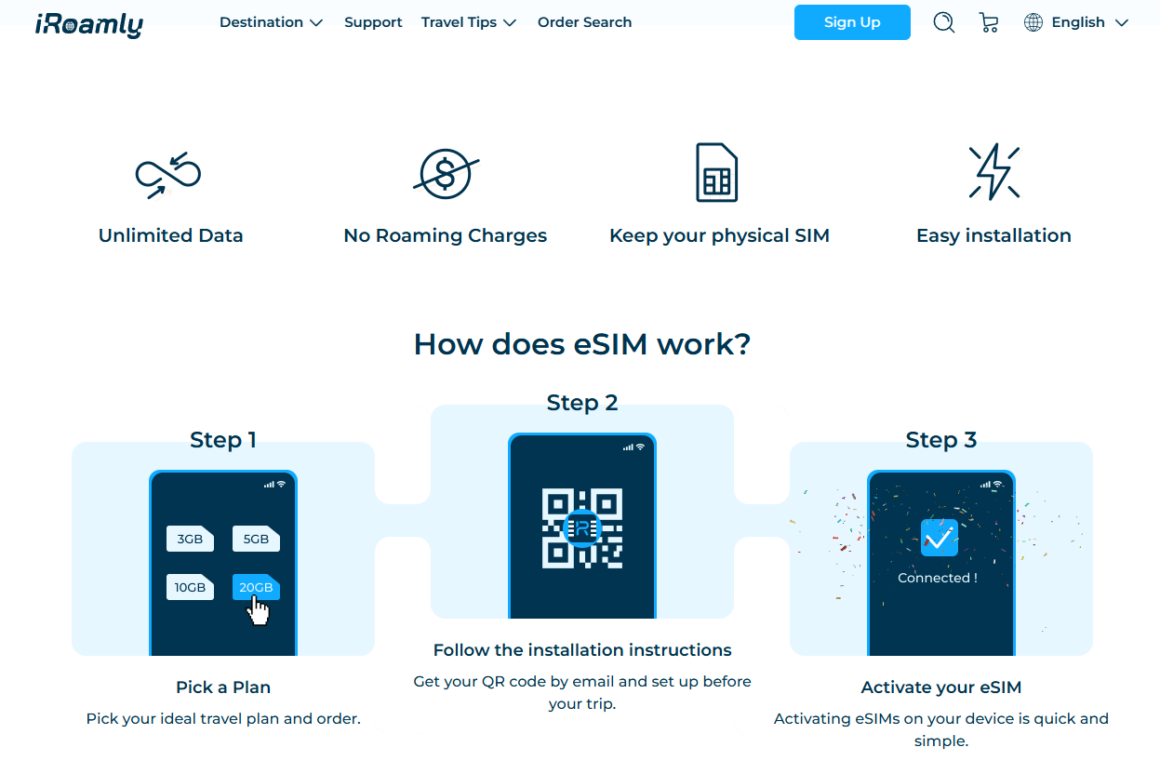
The underlying technology is straightforward: an eSIM is a programmable chip embedded in modern smartphones, tablets, and smartwatches that stores carrier information digitally. You do not insert anything. You do not swap anything. You scan a QR code, download a profile, and your device connects to a local network as if it had always been there. The simplicity is deceptive because it obscures the complexity happening in the background: the service partners with local telecom operators in each country to provide coverage without requiring you to sign a contract or visit a store.
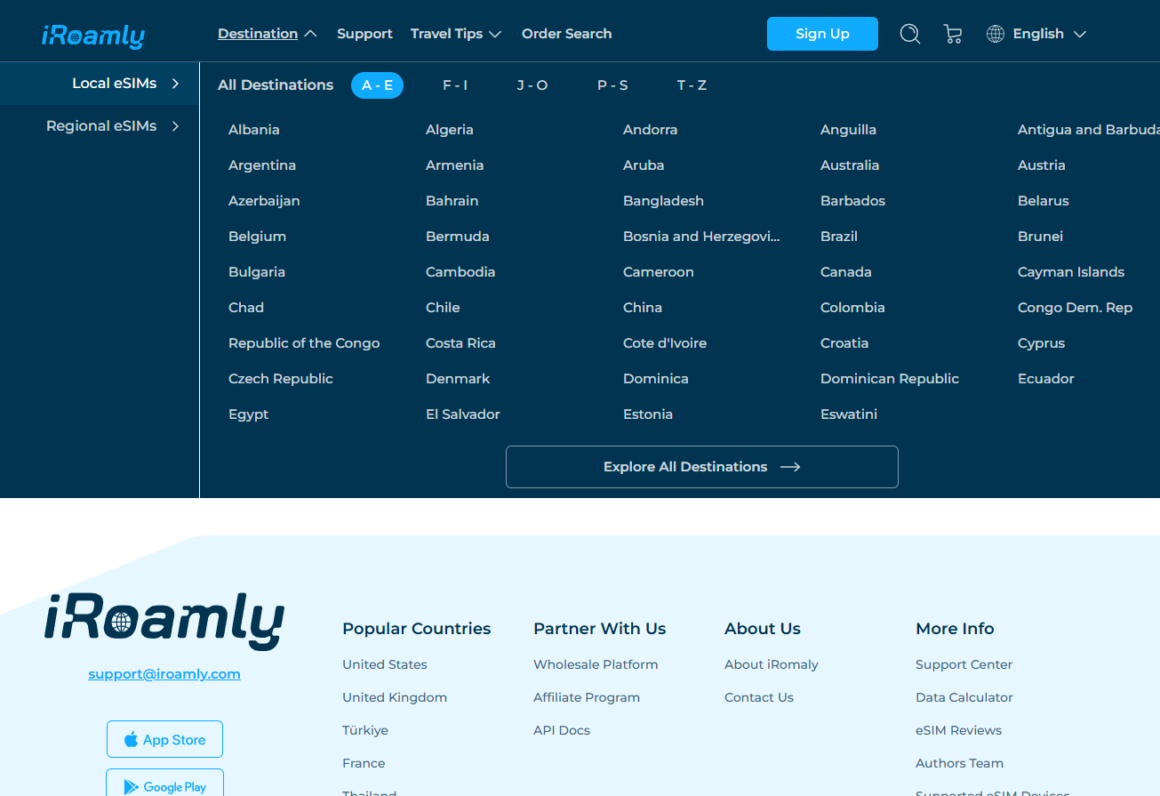
What this means from a practical user perspective is that the entire relationship with connectivity changes. Instead of treating data as something you acquire upon arrival, you treat it as something you prepare before departure. The service operates across more than 150 countries, with packages ranging from 500MB trials to unlimited data plans. The coverage is not uniform—it depends on the quality of the local partner network in each specific location—but the structure eliminates the most common pain points of international travel: language barriers at phone shops, incompatible SIM card sizes, and the eternal question of whether your phone is actually unlocked.
Testing the Service Across Three Distinct Travel Profiles
Rather than evaluating the service in abstract terms, I tested it across three different travel scenarios that reflect the way people actually move through the world. Each scenario revealed a different set of strengths and limitations.
Scenario One: The Multi-Country Backpacker
Testing Task / Difficulty: Maintaining connectivity across borders without purchasing a new SIM in every country.
Actual Performance: I purchased a regional plan covering Southeast Asia and moved through Thailand, Vietnam, and Cambodia over the course of three weeks. The eSIM profile remained active across all three countries, and the device connected to a local partner network automatically upon crossing each border. There was no need to visit a store, no need to register a passport, and no need to reconfigure settings. The connection was consistent in urban areas and dropped to 3G in more remote regions—enough for maps and messaging, not ideal for streaming.
Strengths and Limitations: The convenience of a single installation for multiple countries is significant. However, the service does not control the local network infrastructure, so in areas where the partner carrier has weak coverage, the eSIM will also have weak coverage. This is not a failure of the service but a structural limitation of how eSIM resellers operate.
Who This Works For: Travelers with multi-country itineraries who value simplicity over hunting for the absolute cheapest local rate.
Scenario Two: The Short-Haul Business Traveler
Testing Task / Difficulty: Landing and immediately having reliable data for emails, navigation, and calls without wasting time on setup.
Actual Performance: For a three-day business trip to Singapore, I used a daily plan that provided a fixed amount of high-speed data per day. The installation took place at home before departure—scanning the QR code, downloading the profile, and confirming the installation. Upon landing, I turned on the eSIM line and was connected within seconds. Video calls remained stable, and navigation apps loaded without lag.
Strengths and Limitations: The predictability is the main advantage. You know exactly what you are paying for, and there are no surprise charges. The limitation is that the validity period begins when the eSIM first connects to a supported network, not when you purchase or install it. This means if you install it at home and accidentally enable the line before departure, the clock starts early.
Who This Works For: Business travelers who need reliability and cannot afford to troubleshoot connectivity issues upon arrival.
Scenario Three: The Weekend Getaway
Testing Task / Difficulty: Testing the turkey esim option specifically for a long weekend in Istanbul, focusing on quick activation and sufficient data for daily exploration.
Actual Performance: I opted for an unlimited daily plan, which eliminated the need to monitor usage counters. The installation was identical to the other scenarios—scan, install, confirm. What stood out was the transparency. The service does not throttle speeds arbitrarily, though in some countries, unlimited packages must comply with fair use terms. In practice, I used maps, translation apps, and social media without interruption.
Strengths and Limitations: The daily reset model works well for short trips. The limitation is that the service is data-only—there is no phone number for calls or SMS, though internet-based communication apps work perfectly.
Who This Works For: Weekend travelers and vacationers who want a simple, predictable data plan without overpaying for unused data.
The Operational Flow: What Actually Happens From Purchase to Connection
The official process is minimal, which is precisely the point. The service is designed to reduce friction, not add it.
Step One: Choose Your Plan
Understanding the Three Plan Structures
The service offers three plan types: Daily, Total, and Unlimited. Daily plans provide a set amount of data per day, which resets every 24 hours. Total plans offer a lump sum of data that lasts until you use it up or the validity period expires. Unlimited plans provide unlimited data for the duration of the plan. All paid packages support hotspot tethering at no extra cost. The coverage spans more than 150 countries, with specific regional and global options available.
Step Two: Install Before You Travel
Receiving and Scanning the QR Code
After purchase, you receive a QR code via email or on the success page. The installation requires an internet connection—preferably a fast Wi-Fi network—and the recommendation is to install one to two days before your trip. Scanning the QR code through your device’s cellular settings downloads the profile. The entire installation process takes a few minutes and does not require any special technical knowledge.
A Critical Detail About Validity
The validity period begins when the eSIM first connects to any supported network, not when you purchase or install it. This means you can install it at home, but if you accidentally enable the line before departure, the clock starts. The practical workaround is to install the profile and leave the line turned off until you arrive at your destination.
Step Three: Activate Upon Arrival
Turning On the Service
Once you land, you simply turn on the eSIM line in your device settings and ensure that data roaming is enabled for that line. The service handles the network selection automatically. There is no need to visit a store, show a passport, or wait for an activation code. The connection establishes within seconds of turning on the line.
Comparing the Experience: A Structured Look at the Trade-Offs
To put the service in context, it is useful to compare it briefly to other options available in the market. The following table reflects general trends rather than absolute guarantees, based on publicly available information and my own testing.
|
Aspect |
iRoamly |
Home Carrier Roaming |
Local Physical SIM |
|
Setup Location |
Before departure, at home |
Automatic, upon arrival |
Upon arrival, at a store |
|
Setup Time |
2-3 minutes |
Instant |
15-60 minutes |
|
Plan Flexibility |
Daily, Total, Unlimited |
Limited, often per-MB or flat daily fee |
Varies by country and provider |
|
Coverage |
150+ countries via local partners |
Home carrier’s partner networks |
Single country only |
|
Hotspot Sharing |
Supported on all paid plans |
Usually supported |
Often restricted or requires extra fee |
|
Phone Number |
No (data-only) |
Yes |
Yes |
|
Cost Predictability |
Prepaid, no surprise charges |
Postpaid, potential bill shock |
Prepaid, but subject to exchange rates |
The table is not meant to declare a winner but to illustrate the trade-offs. For travelers who prioritize convenience and predictability, the eSIM model offers a clear advantage. For those who are willing to spend time hunting for the absolute lowest local rate or who absolutely need a local phone number, a physical SIM might still be the better choice in some markets.
The Free Trial: A Practical Way to Test Compatibility
One feature that reduces the risk of trying the service is the free trial. New users can claim a 500MB eSIM that is valid for one day and covers more than 100 popular destinations. No credit card is required to claim the trial. This is useful for two reasons: you can test the installation process at home before your trip, and you can evaluate the network quality in your destination before committing to a paid plan. Each new user is limited to one free trial. In my experience, the trial was sufficient for basic tasks like checking messages and using maps for a few hours, though it is not intended for heavy usage.
The Referral Program: A Small Incentive for Sharing
The referral program adds a minor incentive for existing users to share their experience. When a friend uses your referral code and makes a purchase, you receive $3 in iMoney, and the friend receives $3 off their first purchase. There is no limit on how many times you can share your referral code. The iMoney can be used toward future eSIM purchases across more than 100 countries.
Realistic Limitations Worth Acknowledging
No service is perfect, and it is important to be transparent about the limitations I observed.
The quality of the connection depends entirely on the local partner network in each country. In areas where the partner has weak coverage, the eSIM will also have weak coverage. The service does not operate its own towers, so it cannot guarantee perfect signal in every remote corner. The installation requires a stable internet connection, so you need to set it up before you lose access to Wi-Fi. The eSIM profile can only be installed on one device and cannot be reused after removal. The service provides data only—there is no phone number for calls or SMS. Some users have reported that in certain countries, the unlimited plan may be subject to fair use policies that could affect speed after very high usage. Customer support response times have been noted as inconsistent in some reviews.
These are not deal-breakers for most travelers, but they are worth keeping in mind. The service is designed for data connectivity, not as a full replacement for a primary phone line.
Who Benefits Most From This Approach
Based on my testing, the service is best suited for travelers who fall into a few specific categories.
Frequent flyers who visit multiple countries in a single trip will appreciate the ability to install one profile and use it across borders. Business travelers who cannot afford to spend time setting up local SIMs will value the speed and reliability. Casual vacationers who want a simple, predictable data plan without reading fine print about throttling or hidden fees will find the transparency reassuring. Digital nomads who work remotely and need consistent connectivity will benefit from the unlimited plans and hotspot support.
It may not be the best fit for travelers who spend extended periods in a single remote location with limited network infrastructure, or for those who absolutely need a local phone number for calls and SMS. For everyone else, it represents a practical evolution of how we stay connected while moving through the world.
The shift from physical to digital SIMs is not a trend—it is a fundamental change in how devices connect to networks. Services like this one make that change accessible to ordinary travelers, not just tech enthusiasts. The installation is straightforward, the coverage is broad, and the pricing is transparent. It will not eliminate every connectivity challenge, but it removes several of the most frustrating ones. And that, from a practical user perspective, is a meaningful improvement.