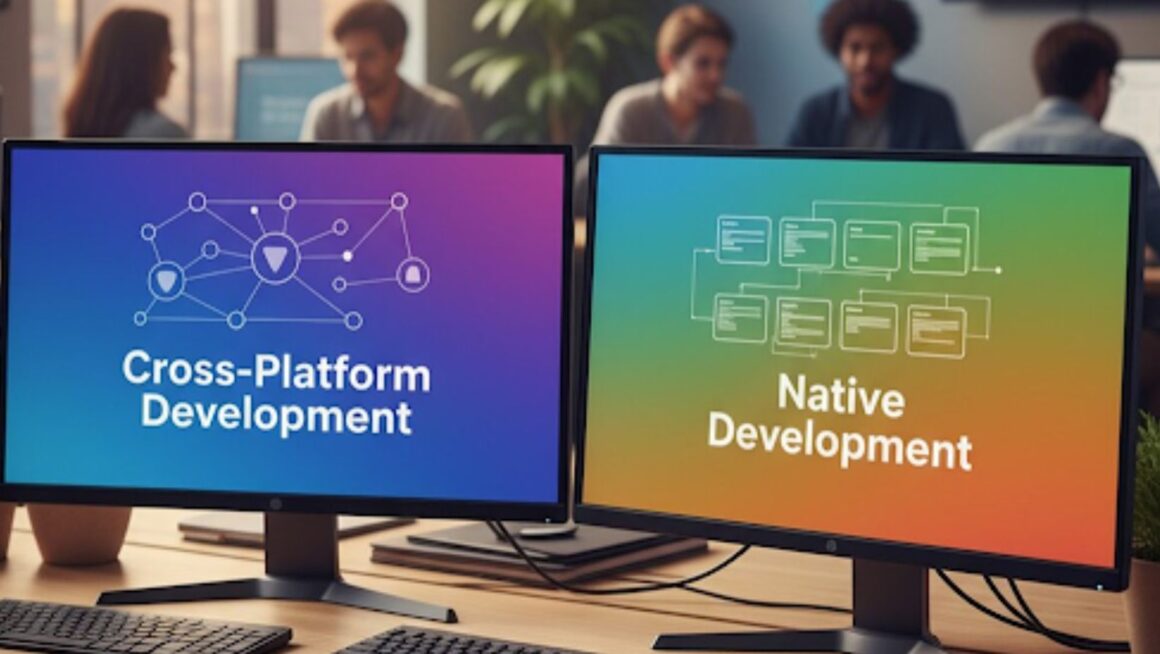
You have an app idea that could transform your business, but here’s where it gets tricky: should your mobile app developers build for iOS and Android separately, or go with a single cross-platform solution using Flutter or React Native?
This choice shapes your budget, timeline, and user experience. Get it wrong, and you’re stuck with costly fixes later. Get it right, and you have a solid foundation for serious growth.
The right approach depends on your specific goals, resources, and market strategy. Let’s break down each option so you can make the choice that actually makes sense for your business.
What Cross-Platform and Native Development Actually Mean
Cross-platform development means writing your code once and deploying it across multiple platforms. One codebase powers both iOS and Android apps. Frameworks handle the translation work, converting your code into something each platform recognizes and runs smoothly.
Native development takes a different route. You’re building two separate apps from the ground up – one specifically for iOS, another for Android. Each uses its platform’s native language and tools. It’s more work upfront, but you get direct access to everything the platform offers without any middleware getting in the way.
Popular Cross-Platform Options
Each cross-platform framework has its strengths and choosing the right one depends on your project goals and team expertise. If you hire dedicated mobile developers for your cross-platform project, ensure they have expertise in at least one of these frameworks:
- React Native: Uses JavaScript or TypeScript and creates real native UI components. Working with a specialized React Native development agency can also help teams evaluate trade-offs between performance, development speed, and long-term maintainability when selecting the right technology stack.
- Flutter: Google’s framework using Dart language – renders everything custom for a consistent look
- Kotlin Multiplatform (KMP): JetBrains’ solution that lets you share business logic across platforms while keeping native UI
- .NET MAUI: Microsoft’s evolution beyond Xamarin using C# – good for teams already using .NET technologies
Native Development Breakdown
With native development, you’re working with tools designed specifically for each platform:
- iOS: Swift programming language, Xcode development environment, Apple’s design guidelines
- Android: Java, Android Studio, Google’s Material Design principles
- Direct platform access: Every feature, every API, every new capability immediately available
- Platform optimization: Apps built specifically for how each system works best
The technical complexity doubles because you’re building two apps. But you get maximum control over performance and features.
Cross-Platform Development: Speed Meets Efficiency
Cross-platform solutions appeal to businesses that want to move quickly without breaking the bank. You’re trading some control for efficiency, and in many cases, that’s exactly the right trade.
The Reality of Shared Code
Most cross-platform projects share about 80% of their code between iOS and Android. That shared code handles your business logic, data management, and API calls. The remaining 20% covers platform-specific tweaks, custom UI elements, and device features.

Your team structures it this way:
- Shared foundation: All the core functionality that works the same everywhere
- Platform customizations: iOS-specific touches for iOS users, Android touches for Android users
- Native bridges: When you need something the framework doesn’t handle yet
Performance Trade-offs You Should Know
Cross-platform apps add a translation layer between your code and the device’s OS. There’s a slight delay, but communication still happens.
For most business apps, this delay is barely noticeable. We’re talking milliseconds. For gaming, real-time video processing, or complex animations, those milliseconds can make a significant difference.
When you hire mobile app developers for cross-platform work, they know how to minimize these delays and make performance issues less noticeable.
Development Speed Advantages
According to Research2Guidance, cross-platform development can help teams save between 30 to 50% of development time. Here’s why:
- Faster launches: Both platforms ready simultaneously
- Unified testing: Fix a bug once, it’s fixed everywhere
- Streamlined updates: Push new features to all users at once
- Easier maintenance: One codebase instead of juggling two separate projects
What You Give Up
Cross-platform frameworks take time to support new platform features. When Apple releases a new iOS capability, you might wait 3-6 months before your framework can use it. For most businesses, this isn’t a deal-breaker. However, if staying on the cutting edge provides a competitive advantage, it’s worth considering when hiring a mobile app development team.
When Cross-Platform Makes Business Sense
Cross-platform works best when speed and cost efficiency align with your business goals.
Perfect for MVPs and Market Testing
Testing a new business idea? Cross-platform enables you to reach the market quickly without doubling your investment. If users love your app, you can continually refine it later. If they don’t, you haven’t spent native development money finding out.
Content and Commerce Apps
Apps focused on displaying content, e-commerce, or straightforward user interactions work well across platforms. Users care more about the quality of your content and shopping experience than whether animations are perfectly smooth. According to Flutter, around 28% of all new apps being launched on the iOS App Store are powered by its framework.
Resource-Conscious Projects
When budget or timeline constraints are real factors, cross-platform development delivers a professional app without the native development price tag. It’s smart for businesses that want to hire mobile developers for their first mobile projects.
Brand Consistency Focus
If having identical user experiences across platforms matters more than platform-specific features, cross-platform ensures perfect consistency.
Native Development: Maximum Control and Performance
Native development is building a custom race car for each track. It costs more and takes longer, but when performance matters, nothing else comes close.
Why Native Apps Feel Different
Native apps follow each platform’s specific design patterns. iOS users get the interactions they expect from iOS apps. Android users get Android-style navigation and behavior. This isn’t just about looks. It’s about creating an experience that feels natural and familiar.
Performance That Matters
According to Syndell, native apps start up 20-40% faster than cross-platform alternatives. They use less battery, handle memory more efficiently, and maintain smooth 60fps animations even during complex operations. For most apps, this performance boost is a welcome addition. For apps involving graphics, real-time data, or heavy processing, it’s necessary.
Immediate Access to Platform Features
When Apple introduces new camera capabilities or Android adds payment features, native developers can use them the same day. You’re not waiting for framework updates or workarounds.
This matters if your app’s competitive advantage comes from using the latest platform capabilities or if you’re building something that pushes device limits.
The Development Investment
Going native means being fully in control of what gets released on which platform. Doing this successfully demands investment in both time and resources. Native development means:
- Two separate codebases to maintain and update
- Platform-specific expertise required for each app
- Longer development cycles since you’re building twice
- Higher costs both upfront and ongoing
You gain maximum flexibility, performance, and access to everything each platform has to offer.
When Native Development Pays Off
Some projects require the performance and platform integration that only native development can provide.
Performance-Critical Applications
Gaming, photo editing, video processing, or real-time communication apps often need every bit of performance they can get. When user experience depends on smooth graphics and instant response times, native development justifies the investment.
Platform-Specific Feature Requirements
If your app’s core value stems from deep integration with device hardware, camera systems, or platform-specific APIs, native development provides full access without compromise.
Long-Term Strategic Investments
When mobile is central to your business strategy and you’re planning years of iterations and expansions, native development provides a stronger technical foundation. The higher upfront cost pays dividends as your app grows in complexity.
Enterprise and Security Requirements
Enterprise applications often have strict performance, security, and integration requirements that native development handles more reliably and securely.

The Smart Hybrid Approach
You don’t always have to choose all or nothing. Smart teams often start cross-platform and selectively move critical features to native as needs become clear.
Starting Cross-Platform, Evolving Strategically
Build your initial app cross-platform to validate the market and user needs. As you identify performance bottlenecks or platform-specific opportunities, rebuild those specific features natively while keeping the stable parts cross-platform.
Feature-Based Decisions
Maybe your core app works great cross-platform, but you need a native implementation for camera features or payment processing. You can mix approaches within the same project.
Before you hire dedicated mobile app developers, ensure they are familiar with both paradigms and can architect applications that support this kind of evolution.
Making Your Decision: A Practical Framework
Here’s how to think through your choice:
- Start with your constraints. What’s your budget? Timeline? Team size? These often eliminate options before you dive into technical details. Be honest about what you can realistically invest.
- Define your performance needs. Does your app need lightning-fast response times? Complex animations? Real-time data processing? Or are you primarily displaying content and handling user interactions? Match your performance requirements to the right technical approach.
- Consider your feature requirements. Will you need cutting-edge platform features? Deep hardware integration? Or can you build a great experience with standard capabilities? This helps determine whether cross-platform limitations will impact your vision.
- Think long-term. Are you building an MVP to test the market? Planning a platform that will evolve for years? Your timeline and growth plans should influence your technical foundation choices.
Finding the Right Development Team
Your technical approach determines what kind of expertise you need. When building your tea of app development experts, their background should match your chosen path.
Cross-Platform Teams Should Have:
- Framework expertise: Deep knowledge of their chosen framework’s capabilities and limitations
- Performance skills: Experience making cross-platform apps feel native
- Native integration experience: Ability to build custom native modules when needed
- Business understanding: Knowledge of when cross-platform works and when it doesn’t
Native Teams Should Demonstrate:
- Platform mastery: Understanding of iOS and Android design principles and best practices
- Performance experience: Work with memory management, battery efficiency, and smooth animations
- Latest feature integration: Track record of implementing cutting-edge platform capabilities
- Cross-platform awareness: Understanding of when native is worth the investment
The best teams can honestly assess which approach fits your situation and explain the real-world implications of each choice for your specific project.
The Bottom Line: Matching Technology to Goals
Cross-platform development gets you to market faster and more affordably. Native development provides maximum performance and platform integration. Neither is automatically better. It depends on what you’re trying to achieve.
If you’re unsure, start with your business goals and work backward. What kind of user experience do you need to deliver? What performance characteristics matter for your success? How quickly do you need to reach users?
Whether you choose cross-platform or native, hire mobile app developers who understand both the technical implications and the business implications of your decision. That’s how you end up with an app that works well technically and drives your business forward.