
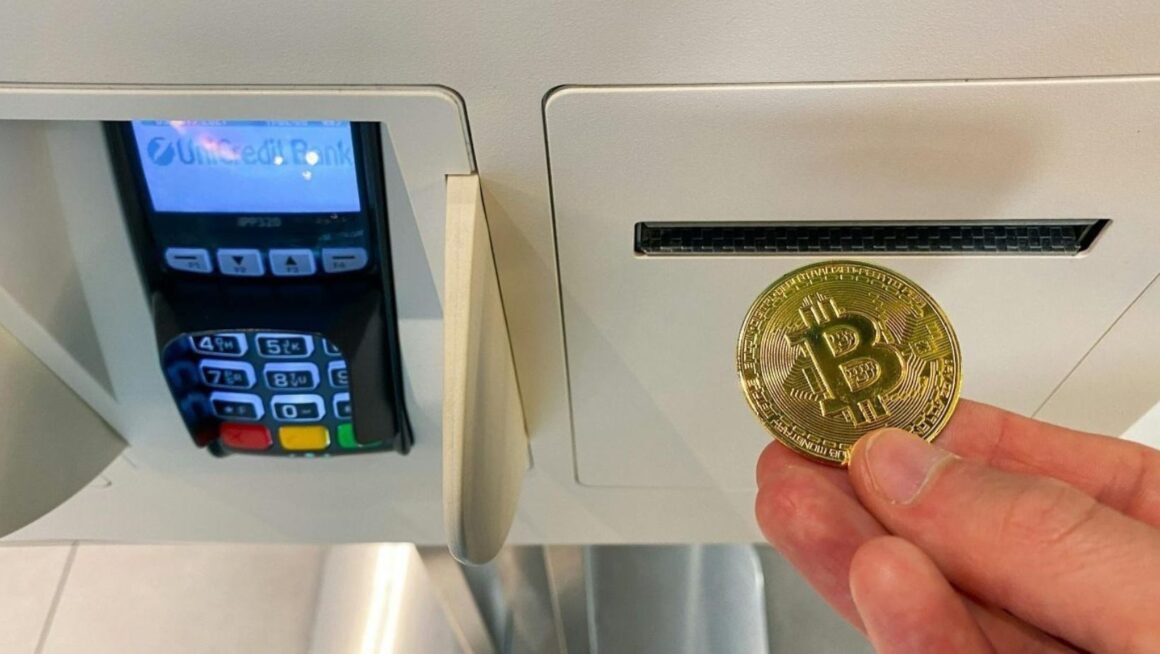
Speed characterizes digital financial services, and in Web3 environments, this expectation has grown, as customers demand value to travel across borders and protocols in minutes rather than days, with transparent verification and minimal friction built into every interaction. Instant payments are no longer considered an add-on feature layered on top of legacy rails; instead, they are a structural requirement for any platform running on blockchain infrastructure, as block explorers, on-chain analytics tools, and real-time dashboards make transaction latency visible to all.
High-volume consumer platforms are increasingly being used as case studies in technology publications that investigate API orchestration, distributed nodes, and fintech scalability, as they show both the strengths and constraints of decentralized infrastructure under pressure. Settlement architecture must perform consistently in sectors with high transaction velocity and strict user expectations, which is why FortuneJack’s casino games and other platforms based on crypto-native rails are designed around rapid deposit and withdrawal cycles that frequently target a 15-minute window. As a result, the underlying stack must coordinate node clusters, liquidity provisioning, wallet segmentation, and automated risk engines into a synchronized pipeline, as separate protocol-level improvements alone are insufficient.
According to 2026 network performance benchmarks published by multiple blockchain analytics providers, leading Layer 1 networks now average block times between 2 and 12 seconds, with probabilistic finality frequently achieved within two to three minutes under normal congestion conditions; however, raw block production speed does not always translate into predictable withdrawals, though it remains a foundational variable.
Layer 1 Throughput, Finality and Network Design
At the protocol layer, throughput capacity and consensus design determine the outer bounds of transaction speed, and this is where architectural trade-offs become apparent, since more throughput often calls for more complicated validator coordination. Several major networks typically process thousands of transactions per second during peak loads, yet confirmation depth regulations still determine when funds are considered final within application logic. Although a single confirmation can appear in seconds, most platforms require many confirmations before crediting or releasing cash; as a result, the effective withdrawal window is a set combination of speed and security.

As a result, node infrastructure is critical, as high-volume platforms rarely rely on public RPC endpoints, which can cause latency spikes and rate constraints. Instead, they deploy regionally distributed complete nodes, which are usually containerized and administered using Kubernetes clusters, so that load balancing reduces propagation delays and prevents regional disruptions. Real-time mempool monitoring feeds into fee estimate engines, which constantly alter transaction rates based on congestion models, lowering the likelihood of blocked withdrawals even during peak traffic times.
Unlike previous blockchain integrations, which relied on manual fee adjustments, systems now use predictive analytics that foresee short-term congestion trends, allowing transactions to be priced to fit inside target confirmation windows.
Wallet Architecture and Liquidity Orchestration
Beyond the foundation layer, wallet architecture impacts whether theoretical blockchain speed can be translated into actual 15-minute withdrawals, as funds must be properly positioned before a transaction is broadcast. A standard Web3 treasury model distinguishes between hot wallets, warm wallets, and cold storage, and this segmentation is maintained by automated policies rather than manual treasury intervention.
Hot wallets, which link directly to application servers, are calibrated using liquidity forecasting algorithms that consider withdrawal velocity, asset distribution, and seasonal traffic patterns; insufficient liquidity causes queueing delays, while excessive exposure raises operational risk. Automated rebalancing scripts transfer assets across wallet tiers based on threshold triggers, and these scripts often run across numerous chains at the same time, as multi-chain settings are increasingly the norm.
Liquidity orchestration layers collaborate with treasury management systems to track asset allocation among tokens and networks in real-time. When user demand swings toward a given asset, internal swap engines or cross-chain bridges may activate automatically, however such transfers are subject to pre-defined risk parameters. This interconnected treasury logic ensures that when a withdrawal request is received, there is already sufficient liquidity in a hot wallet, reducing administrative approvals and latency.
Smart Contract Automation and Event-Driven Systems
Smart contracts function as programmable settlement layers, and in many Web3-native systems, withdrawal requirements are encoded directly into on-chain logic. Platforms usually keep internal ledgers off-chain for performance reasons, but settlement takes place on-chain via event-driven triggers that link backend services to contract functions.
When a withdrawal is initiated, backend microservices validate balances, analyze risk scores, and compute optimal transaction costs; once these checks are complete, the system launches the applicable smart contract procedure. Oracles and monitoring agents then track confirmation progress, sending status updates back to user interfaces in real time, increasing transparency without requiring manual intervention.
This automation is what reduces processing time because risk-based routing determines which transactions go through immediately and which require secondary verification. Unlike early-generation systems, which relied on batch processing, current architectures incorporate asynchronous message queues and event buses to enable parallel execution of identity verification, compliance checks, and blockchain broadcasting.