
Not so long ago, the use of chatbots was regarded as the greatest achievement in the adoption of AI in the enterprise sector. They handled support tickets and gave replies to customers’ commonly asked questions, thus making communication easier and faster. However, nowadays, the generative AI consulting services are surpassing the mere use of scripted replies and pre-trained assistants in the organization—they are changing the way entire businesses operate.
The cutting-edge businesses have begun to use the services of the generative AI consulting firms not only for initial automation but also for developing the future systems of creation, reasoning, and assisting. The mentioned systems are already helping the companies to think of the possible ways in which the workflow of the whole company is going to be changed in the different departments, and these are marketing, software engineering, finance, supply chain, and customer experience.
Transformation of AI in Business
The first stage in the adoption of AI technology in the business world was the easiest one, which was robotic process automation (RPA) and other similar rule-based methods such as chatbots and dashboards that were backed up by data. These tools made the business process more efficient but did not contribute much in the area of creativity.
Generative AI, which is based on large language models (LLMs) and sophisticated neural networks, has overturned the situation. The technology not only processes data but also produces several types of outputs, such as code, reports, marketing collateral, product design, and even strategic advice.
Enterprises are now aware of the fact that generative AI is a tool that can enhance the knowledge worker, not just the one who performs the routine tasks. Organizations are getting to use generative AI models ethically, effectively, and deployed at a large scale through the expert-led AI consulting and implementation services.
From Automation to Co-creation
The primary objective of the traditional AI-like processes was to diminish human workload, while generative AI is now giving that human workforce a reason to be more efficient by
Let’s take a look at the different departments and teams within a company that use it
Data Analytics and Reporting
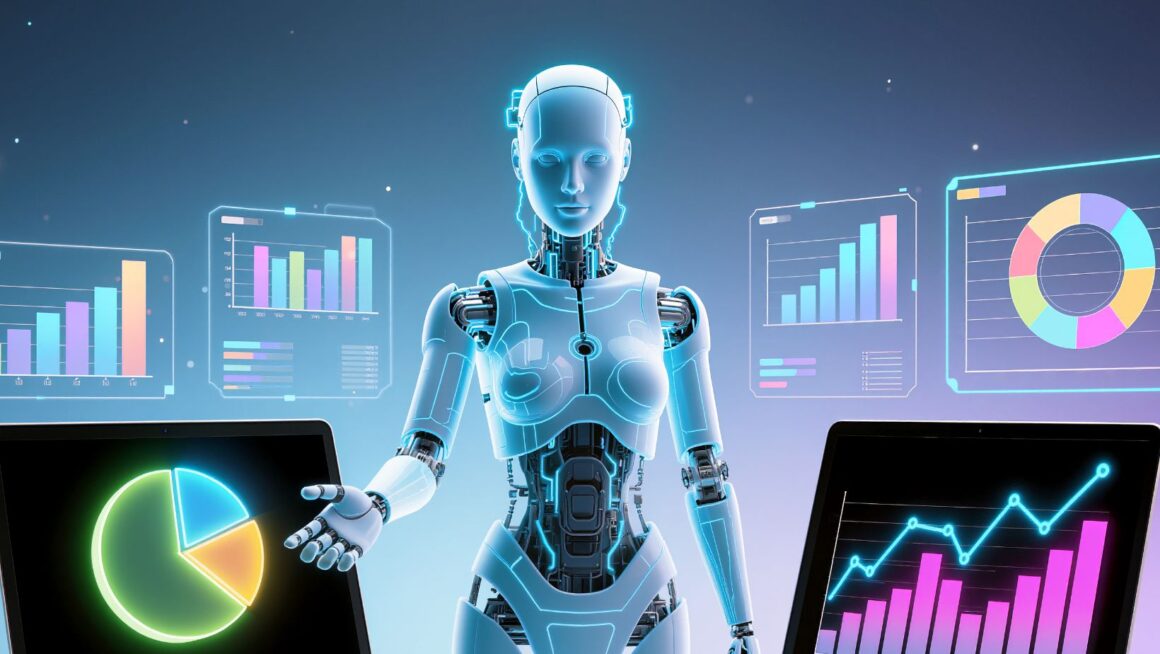
The use of AI in generating insights enables business analysts to formulate their inquiries in everyday language and receive orderly reports nearly instantly. Generative AI can convert raw data into a visual dashboard or an executive summary, and it can also do without time-consuming manual formatting.
Human Resources and Internal Operations
Generative AI is the main pillar of the HR and operational support in the staff application process, training material distribution and many other related activities. The time saved is therefore spent in prioritizing the HR department’s strategic initiatives.
The transition from automation to co-creation has revealed to businesses the areas of their operations that are both innovative and productive.
Why Generative AI Consulting Is the Catalyst for Transformation
However, the challenge of great potential is not an easy one – the adoption of generative AI is not a simple matter of plugging and playing the new equipment. Companies have to go cautiously and assess technology factors such as the right one, governance, data, and ethical deployment, in order to achieve the desired results. This is precisely where consulting by the experts proves invaluable.
1. Strategic Alignment
Consulting partners assist organizations in determining the most beneficial area for the generative AI application in terms of the business value, whether that be automating creative work, speeding up the making of decisions, or the improvement of customer experiences.
2. Responsible implementation
It is essential to have very strict limitations in place concerning data privacy, bias reduction, and AI transparency if one wants to develop AI ethically. Generative AI consulting companies help companies to create models that both follow the laws and are in accordance with the firms’ ethics.
3. Custom Model Development
If the case is ChatGPT and other similar applications, these are mighty tools but quite possibly not the right ones for big companies. The consultants, however, provide custom solutions that are tailored to the client’s data and thus offer both domain expertise and security.
The right consulting partner connects the gap between the idea and the implementation, and the generative AI that was once thought of as nothing but a gimmick gets turned into a strategic investment.
Enterprise Use Cases: Beyond the Chatbot
Generative AI is halfway through almost all enterprise operation sectors already. The following are the main areas in which AI is transforming the workflows.
1. Intelligent document processing: Generative models are able to summarize, tag, and draw out insights from legal or financial documents that are thousands of pages long. As a result, there is a considerable decrease in the time applied by legal and compliance teams for their manual reviews.
2. Customer support augmentation: Using AI instead of simple chatbot replies provides contextual knowledge base articles and dynamic recommendations, which is a more human-like customer experience.
3. Code generation and maintenance: AI-assisted development permits the IT teams to work on the legacy systems, old code, and new feature prototypes at an unparalleled speed.
4. Personalized training and knowledge management: HR and L&D departments apply AI in creating personalized learning modules and knowledge repositories, thereby increasing employee engagement and productivity.
5. Creative and design workflows: Text-to-image and text-to-video models can be employed by the designers to make marketing visuals or product mockups, fast-tracking the creative cycles.
These utilization cases are proof of the overlapping area between generative AI and the core of enterprise productivity.
Conclusion
Generative AI has moved past chatbots and easy functions to a point where it is being seen as a catalyst for altering business operations and growth altogether. The technology is transforming enterprise workflows in all sectors, from product development to employee performance.
Joining hands with a veteran partner like N-iX, firms can take the path of generative AI implementations that are responsible, fast, and wide-reaching. Apart from offering a quick service through expert generative AI consulting, the companies have the right to work together with the intelligent systems as a partner.
As the companies are still to find out the full potential of generative AI, those who shall combine strategy, governance, and innovation will be the digital transformation leaders of the next wave.